

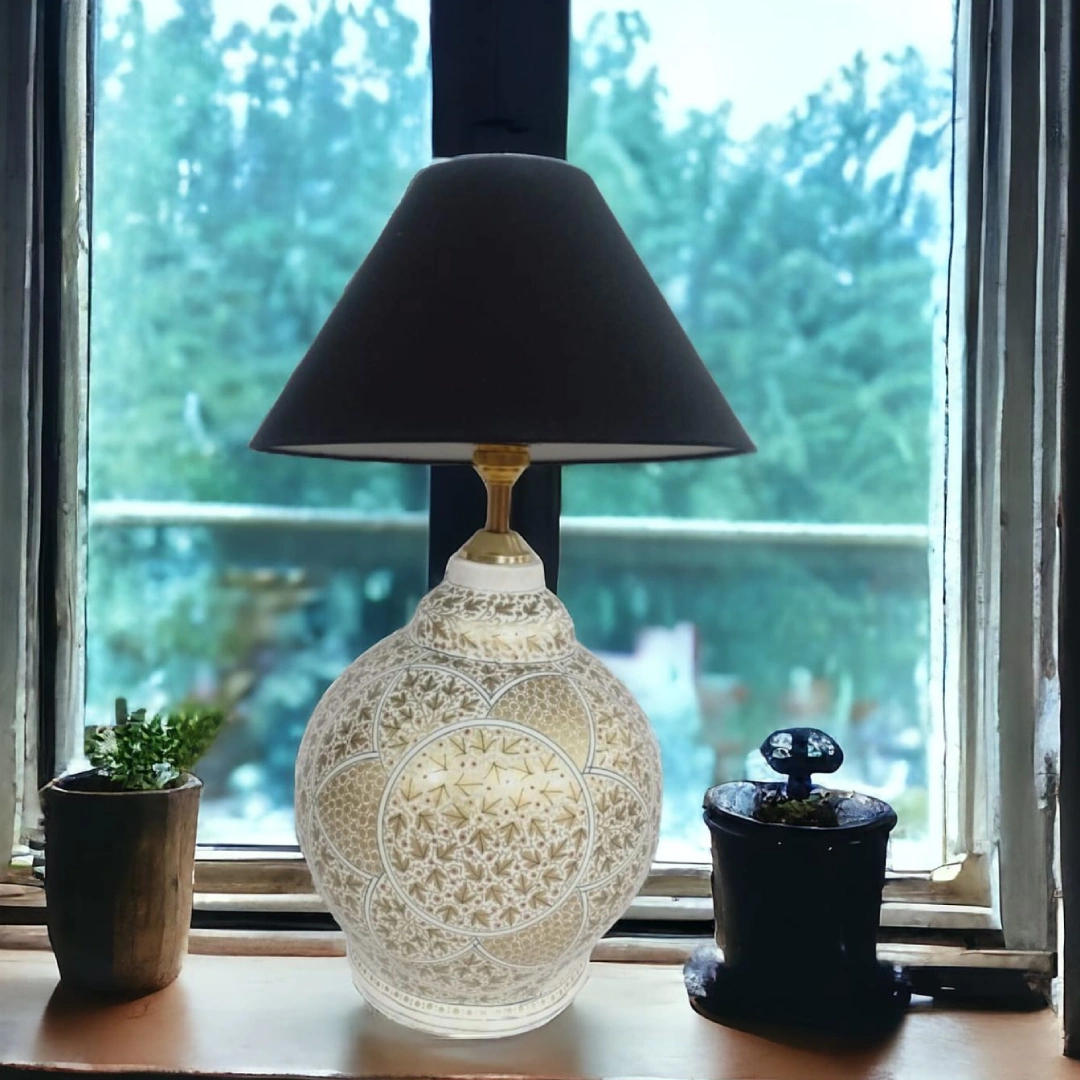
Description
Kashmiri Paper Mâché – An Overview
Origin of Paper Mâché
The term paper mâché is derived from the French words papier (paper) and mâché (chewed or mashed), meaning “mashed paper.” The technique originated in China, where it was initially used to create helmets and utility objects. From China, the craft spread to Persia and later reached India in the 15th century.
In Kashmir, paper mâché was introduced by Persian artisans who accompanied Sultan Zain-ul-Abidin, a great patron of arts and crafts. Under his rule, the craft flourished and evolved into a distinctive Kashmiri tradition.
Paper Mâché in India
In India, paper mâché found its strongest identity in Kashmir. Local artisans refined Persian techniques and incorporated indigenous motifs, colors, and aesthetics, transforming paper mâché into a celebrated Kashmiri art form. Over time, it became deeply woven into the cultural and artistic heritage of the region.
Quality Types of Kashmiri Paper Mâché
- Sakhtsazi – This stage involves forming the base structure of the object by molding layers of paper pulp. It determines the strength and durability of the product.
- Naqashi – Once the base hardens, the object is painted and decorated with intricate floral patterns, animal motifs, traditional Kashmiri designs, and sometimes gold leaf work. This stage defines the visual quality and artistic value.
The overall quality of paper mâché depends on:
- The materials used (quality paper, natural adhesives)
- The complexity of the design
- The skill and experience of the artisan
GI Tag for Kashmiri Paper Mâché
Kashmiri paper mâché has been awarded the Geographical Indication (GI) tag, recognizing its unique traditional craftsmanship and strong association with the Kashmir region. The GI status protects the authenticity of the craft, prevents imitation, and safeguards the livelihoods of local artisans.
Lifespan of Paper Mâché Products
When crafted using high-quality materials and properly cared for, Kashmiri paper mâché items can last for several decades. However, exposure to moisture, prolonged sunlight, or physical impact can reduce their lifespan, as the material is sensitive by nature.
Process of Making Kashmiri Paper Mâché
- Preparation of Pulp – Waste paper is soaked in water until it breaks down, then mixed with natural adhesives such as rice flour, gum, or glue.
- Molding and Drying – The pulp is shaped into molds or desired forms like boxes and vases, and allowed to dry completely.
- Coating and Smoothing – A glue coating is applied, and the surface is smoothed using stones or files to achieve an even finish.
- Naqashi (Painting and Decoration) – The object is coated with a base color, after which intricate hand-painted designs are added. Fine brushes, traditionally made from cat hair, are used for detailing.
- Varnishing – A final layer of varnish is applied to protect the artwork and enhance its glossy appearance.
Kashmiri paper mâché is admired worldwide for its elegance, intricate detailing, and the region’s commitment to preserving this centuries-old artistic tradition.

Reviews
There are no reviews yet.