
Description
Kashmiri Pashmina Shawls – An Overview
Kashmiri Pashmina shawls are among the most luxurious textiles in the world, prized for their exceptional softness, warmth, and lightness. Pashmina is made from the fine undercoat of the Changthangi goat, native to the high-altitude Himalayan regions of Ladakh. Handcrafted in Kashmir using traditional techniques, these shawls represent centuries of cultural heritage and artisanal excellence.
Origin of Pashmina Shawls
Pashmina has a long and distinguished history dating back several centuries. It is believed to have been introduced to India by Persian and Central Asian traders and travelers. The term Pashmina is derived from the Persian word “Pashm,” meaning soft gold or soft wool, reflecting its rarity and value.
By the 15th century, Pashmina became highly favored in the Mughal court, especially under the patronage of Akbar, who played a significant role in popularizing Pashmina shawls across India.
Types of Pashmina Shawls
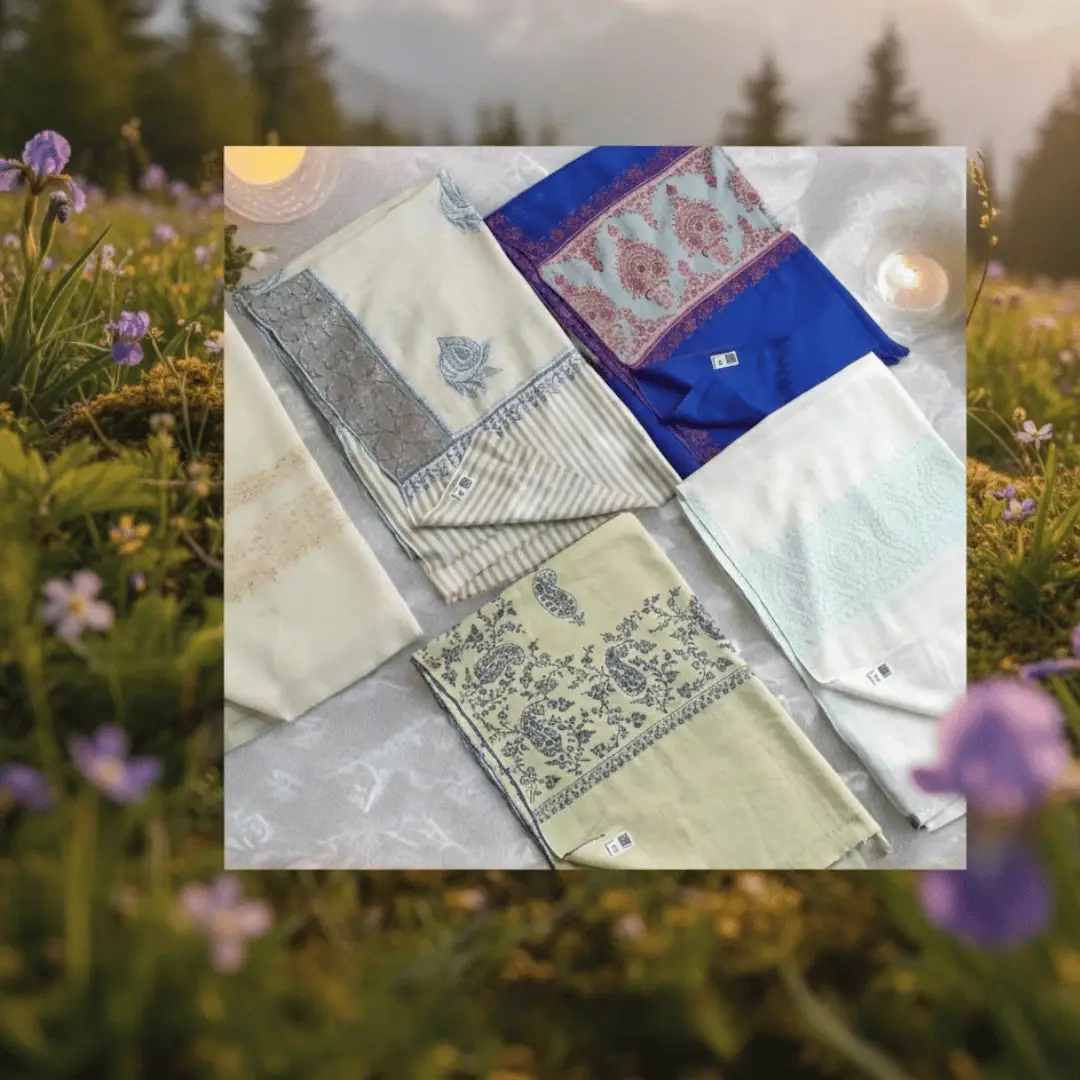
- Kani Pashmina Shawl – Handwoven using wooden sticks called kanis. Known for intricate patterns and vibrant colors, these are considered the most luxurious and time-intensive.
- Loom-Woven Pashmina Shawl – Woven on traditional handlooms; more affordable than Kani shawls while still showcasing fine craftsmanship.
- Embroidered Pashmina Shawl – Decorated with hand embroidery featuring traditional Kashmiri motifs such as paisleys and floral designs, using silk or cotton threads.
Quality of Pashmina Shawls
The quality of Pashmina is determined by fiber fineness, measured in microns. The finest Pashmina fibers range between 12–16 microns, making the shawls incredibly soft, warm, and lightweight. Lower-quality variants may reach up to 19 microns.
A hallmark of high-quality Pashmina is its delicacy—it can effortlessly pass through a small ring, a traditional test of authenticity.
GI Tag for Pashmina Shawls
Kashmiri Pashmina shawls have been awarded the Geographical Indication (GI) tag to protect their authenticity and cultural heritage. The GI tag certifies that the shawl originates from Kashmir and is crafted using genuine Pashmina wool and traditional methods. This recognition helps prevent counterfeiting, supports local artisans, and preserves the legacy of this iconic craft.
How to Identify Original Pashmina Shawls vs. Fake
- Touch and Texture – Authentic Pashmina feels exceptionally soft, warm, and light; fake versions feel heavier and coarser.
- Ring Test – Genuine Pashmina can easily pass through a small ring due to its fine weave.
- Burn Test – Real Pashmina smells like burning hair when a thread is burnt; synthetic fibers smell like plastic.
- Price Check – Authentic Pashmina is expensive due to the rarity of the wool and labor-intensive process; unusually low prices indicate imitation.
- Certification – Look for the official GI certification label or hologram issued by authorized bodies to confirm authenticity.
Kashmiri Pashmina shawls remain a timeless symbol of luxury, craftsmanship, and cultural pride, cherished across generations and admired worldwide.
Reviews
There are no reviews yet.