

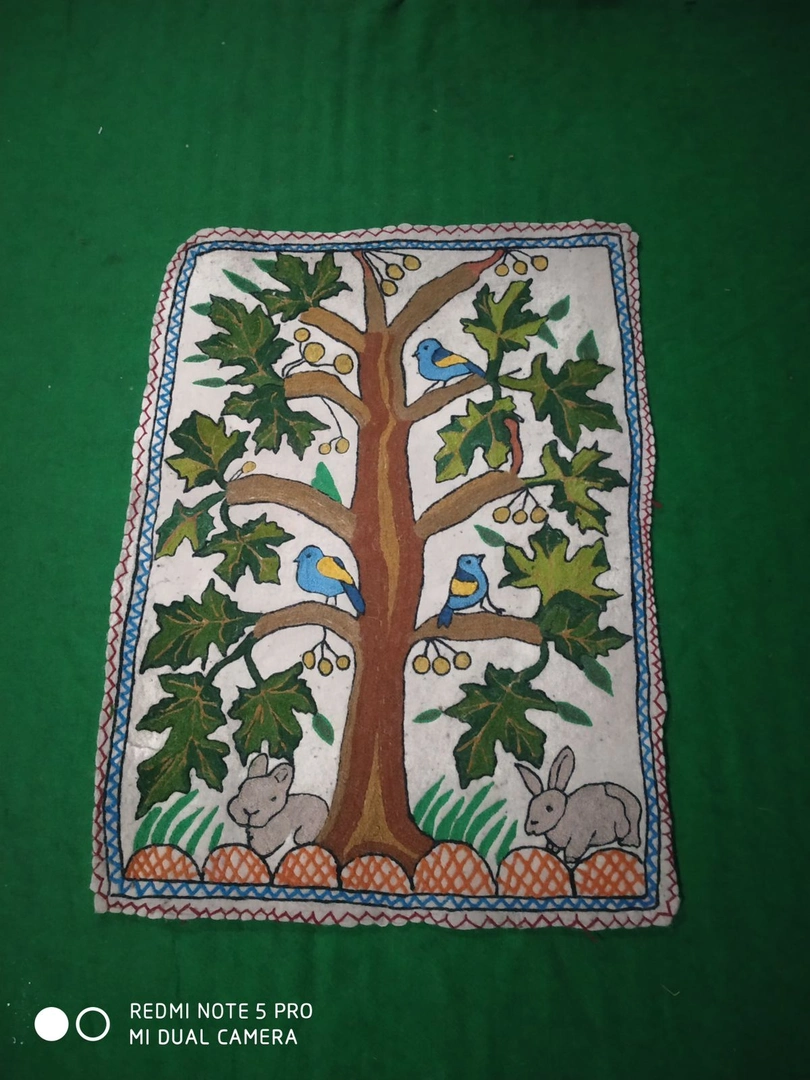
Description
Kashmiri Hand-Knotted Carpets (Kaleen) – An Overview
Origin of Kashmiri Hand-Knotted Carpets
Kashmiri hand-knotted carpets, locally known as Kaleen, trace their origin to the 15th century during the reign of Sultan Zain-ul-Abidin. He is credited with inviting skilled artisans from Persia to Kashmir, who introduced the sophisticated art of carpet weaving. Over time, this technique blended with local traditions and evolved into a distinct Kashmiri craft. The strong Persian influence remains visible in the intricate patterns, motifs, and knotting techniques used today.
Introduction to India
Although the hand-knotting technique originated in Persia, it was firmly established in India through Kashmir in the 15th century. The craft gradually spread across the region and gained widespread recognition for its fine workmanship, complex designs, and use of high-quality natural materials. Kashmiri carpets soon became synonymous with luxury, durability, and artistic excellence.
Types of Quality in Kashmiri Hand-Knotted Carpets
- Silk Carpets – Made entirely from silk, these carpets are extremely fine, soft, and richly detailed, primarily used for decorative purposes.
- Wool Carpets – Crafted from pure wool, these are durable, warm, and suitable for regular use.
- Silk-on-Wool Carpets – A combination of silk knots on a wool base, offering both durability and intricate design clarity.
- Cotton Foundation Carpets – Carpets woven on a cotton base with wool or silk knots, providing added strength and longevity.
GI Tag Recognition
Kashmiri hand-knotted carpets were awarded the Geographical Indication (GI) tag to safeguard their authenticity and traditional craftsmanship. The GI status helps prevent counterfeit products, protects artisan livelihoods, and highlights the uniqueness of Kashmiri carpets—particularly their hand-knotting techniques, detailed designs, and region-specific materials that cannot be replicated elsewhere.
Life of Kashmiri Hand-Knotted Carpets
The lifespan of a Kashmiri carpet depends on the material used and the knot density (knots per square inch). Wool carpets can last 150–200 years, while silk-on-silk carpets, when properly maintained, can endure for 2 to 5 centuries. Higher knot density indicates superior craftsmanship and contributes significantly to durability and longevity.
Process of Making Kashmiri Hand-Knotted Carpets
- Designing – A Naqash (designer) prepares a detailed pattern on graph paper, mapping every knot and color.
- Warping – The carpet base is set using cotton, wool, or silk threads stretched on a loom.
- Weaving – Weavers follow the design chart and hand-knot wool or silk threads onto the warp. Knot density determines quality.
- Washing and Finishing – The carpet is washed to enhance color brightness, then stretched, trimmed, and finished for a refined appearance.
Types of Knots Used
- Senneh Knot (Persian Knot) – Allows finer detailing and is most commonly used in Kashmiri carpets.
- Ghiordes Knot (Turkish Knot) – A symmetrical knot that adds strength and durability.
Kashmiri hand-knotted carpets stand as enduring symbols of artistic mastery, cultural heritage, and exceptional craftsmanship, admired worldwide for their beauty and longevity.



Reviews
There are no reviews yet.