

Description
Madhubani Painting on Sarees – An Overview
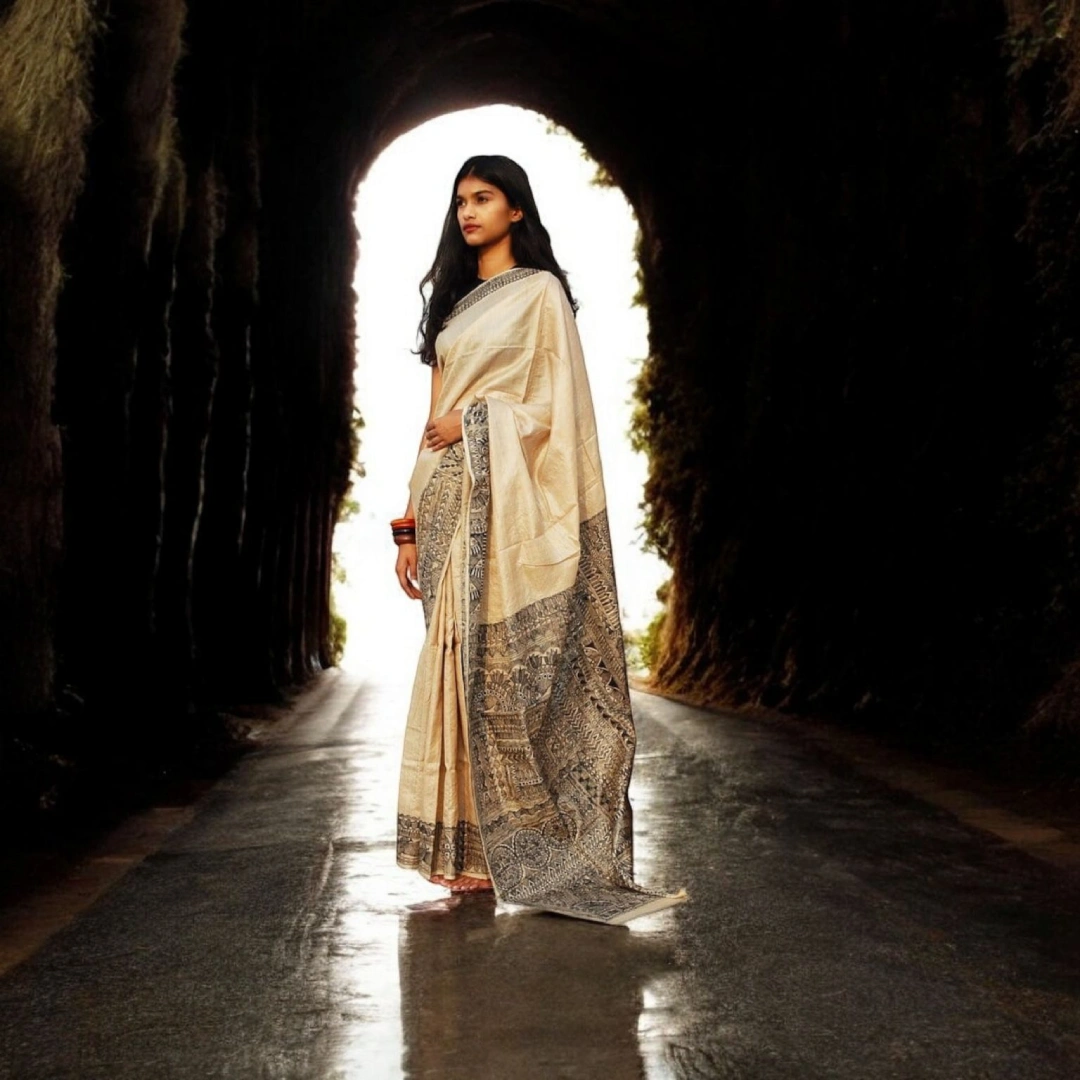
Madhubani painting, also known as Mithila painting, is a traditional Indian art form that originated in the Mithila region of Bihar. Historically practiced by women on walls and floors during festivals and auspicious occasions, this ancient folk art later evolved onto paper, fabric, and sarees. Today, Madhubani-painted sarees are admired for their cultural richness, storytelling, and handcrafted beauty, making them a distinctive blend of art and fashion.
Origin
The origins of Madhubani painting are believed to date back several thousand years. According to tradition, the art began during the time of the Ramayana, when King Janak commissioned artists to decorate the palace walls for the wedding of his daughter Sita. Over centuries, the art form developed as a visual expression of Mithila’s culture, beliefs, rituals, and mythology.
Process of Making Madhubani Paintings on Sarees
- Materials – Traditionally, artists used natural dyes and pigments extracted from plants, flowers, minerals, and organic sources. Brushes were handmade using twigs, cotton, or bamboo sticks.
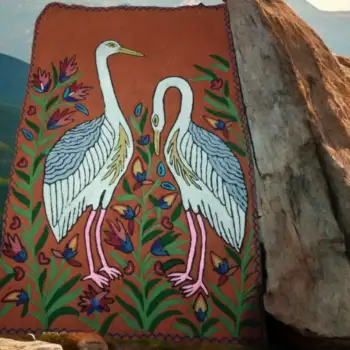
- Design – Each saree is hand-painted with intricate patterns featuring motifs from nature—such as flowers, birds, fish, and animals—as well as scenes from Hindu mythology. Bold outlines, geometric forms, and vibrant colors are key characteristics.
- Technique – The fabric is pre-treated and dyed before painting begins. Designs are carefully drawn and filled in by hand, a process that may take several days to weeks depending on complexity.
Life of Madhubani Painting on Sarees
- Cultural and Aesthetic Value – Madhubani-painted sarees are valued for their strong connection to Indian heritage and are often worn as a symbol of cultural pride and artistic appreciation.
- Durability – The longevity of the artwork depends on fabric quality, dye type, and care. While natural dyes may fade gradually, improved modern techniques have helped extend the vibrancy and lifespan of the paintings.
GI Tag History
Madhubani painting received the Geographical Indication (GI) tag in 2007, helping safeguard its authenticity and protect the rights of artisans from the Mithila region. This recognition strengthened the art form’s identity and provided greater visibility and economic opportunities for traditional artists.
Decline and Contemporary Challenges
Although Madhubani painting has not gone extinct, certain traditional practices are in decline due to several factors:
- Industrialization and Mass Production – Printed and machine-made textiles are more affordable, reducing demand for hand-painted sarees.
- Lack of Young Practitioners – Younger generations often avoid the craft due to its labor-intensive nature and comparatively lower income potential.
- Limited Market Reach – Despite its cultural significance, Madhubani painting on sarees remains a niche market with limited large-scale commercial exposure.
Even with these challenges, Madhubani painting on sarees continues to be a cherished art form, representing the enduring artistic legacy of the Mithila region.
Reviews
There are no reviews yet.