


Description
Banarasi Saree – An Overview
Origin of Banarasi Saree
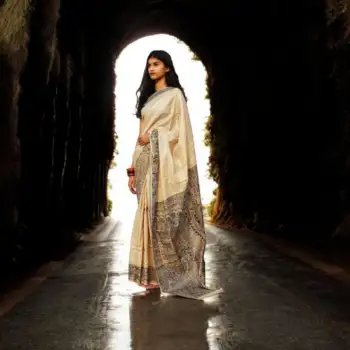
Banarasi sarees originate from Varanasi (also known as Banaras), one of the oldest living cities in the world. The tradition of Banarasi weaving flourished during the Mughal era, when Persian aesthetics blended with Indian craftsmanship. Mughal patronage encouraged fine silk weaving, leading artisans to create richly brocaded sarees adorned with intricate motifs and luxurious gold and silver threads.
GI Tagging of Banarasi Sarees
Banarasi sarees were awarded the Geographical Indication (GI) tag in 2009. This recognition protects the authenticity of Banarasi sarees by ensuring that only sarees woven in Varanasi and its surrounding regions using traditional methods can be marketed under this name. The GI tag plays a vital role in preserving age-old weaving techniques and safeguarding the livelihoods of traditional weavers from imitation and mass-produced alternatives.
Historic Significance of Banarasi Sarees
Banarasi sarees hold a prominent place in India’s cultural heritage. Historically worn by royalty and aristocracy, they symbolized wealth, refinement, and prestige. Today, they remain synonymous with luxury and tradition, especially favored for weddings, religious ceremonies, and special occasions. Their timeless appeal lies in the harmonious blend of Indian artistry and Mughal design sensibilities, passed down through generations.
Process of Making a Banarasi Saree
- Designing (Naksha) – The design is first conceptualized and drawn on paper, inspired by Mughal motifs, floral patterns, vines, or traditional butidar (small dot) designs.
- Dyeing of Silk – High-quality silk yarns are dyed in rich, vibrant colors according to the design requirements.
- Weaving – Using traditional handlooms, artisans weave the saree through labor-intensive techniques such as brocade weaving. This stage may take several weeks or even months.
- Zari Work – Pure gold or silver threads are traditionally used to create intricate zari patterns, giving Banarasi sarees their signature richness and grandeur.
- Finishing – The saree undergoes careful finishing, including trimming, inspection, and final touch-ups before it is ready for use.
Types of Banarasi Sarees
- Katan – Pure silk Banarasi sarees known for their smooth texture, strength, and durability.
- Shattir – A modern, lightweight fabric used for contemporary Banarasi designs.
- Organza (Kora) – Crafted with silver threads coated with gold, featuring elaborate and delicate patterns.
- Georgette – A lighter and more fluid variety, popular for modern and party wear.
- Brocade – Characterized by heavy zari work with floral and nature-inspired motifs.
Banarasi sarees continue to be an essential part of Indian traditional attire, representing exceptional craftsmanship, cultural pride, and enduring elegance.
Reviews
There are no reviews yet.