

Description
Kashmiri Pinjrakari – Brief Overview
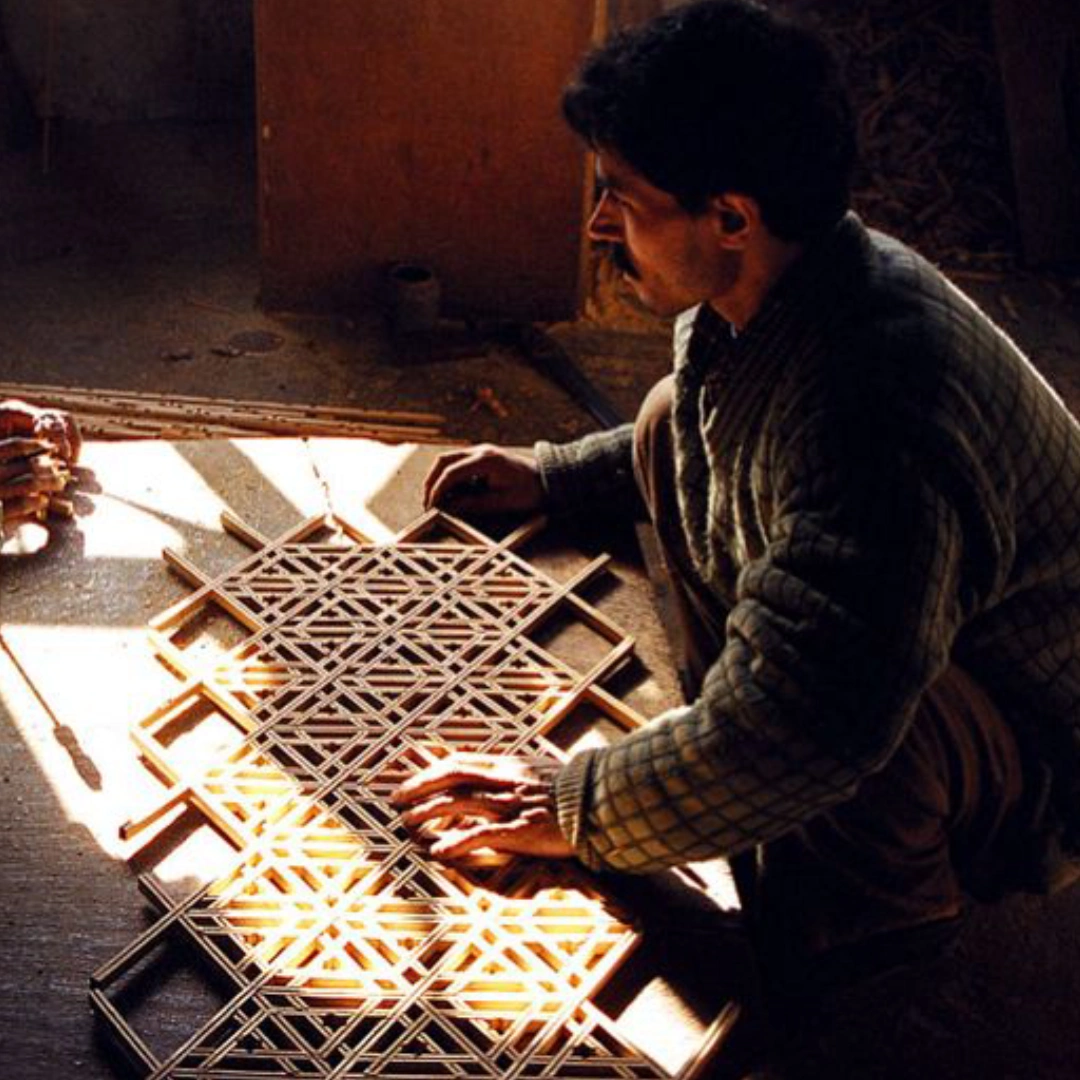
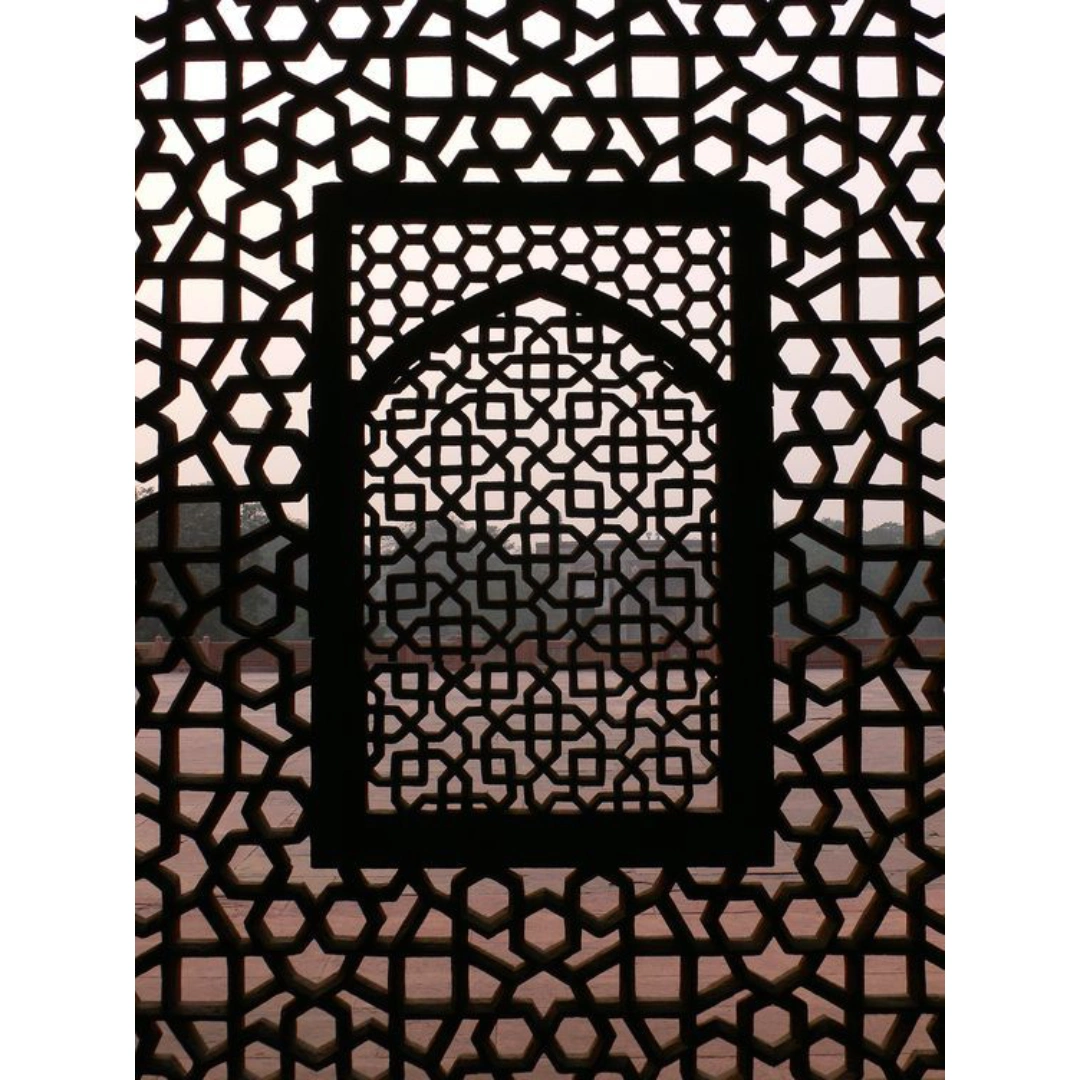
Kashmiri Pinjrakari is a traditional wooden latticework craft from Kashmir, primarily used in architectural elements such as windows, doors, ventilators, and screens. Characterized by intricate jali-like patterns, Pinjrakari serves both decorative and functional purposes—allowing ventilation and filtered light while ensuring privacy. It was commonly seen in mosques, shrines, palaces, and traditional Kashmiri homes.
Origin of Kashmiri Pinjrakari
The craft of Pinjrakari is believed to have been introduced to Kashmir by Central Asian and Persian artisans during the 15th century, under the patronage of Sultan Zain-ul-Abidin. His reign marked a golden period for Kashmiri arts and crafts, with strong encouragement for cultural exchange and craftsmanship.
Pinjrakari evolved from Islamic architectural traditions, drawing inspiration from geometric symmetry, floral forms, and calligraphic influences commonly found in Persian and Mughal art.
Historic Significance of Kashmiri Pinjrakari
Kashmiri Pinjrakari holds deep cultural and architectural importance:
- Islamic Architectural Heritage – It was an essential element in mosques, shrines, and traditional buildings, reflecting Islamic aesthetics blended with local craftsmanship.
- Aesthetic and Functional Value – Beyond its visual beauty, Pinjrakari allowed natural airflow and light while maintaining privacy and insulation.
- Cultural Identity – The craft represents a unique artistic legacy of Kashmir, passed down through generations of skilled woodworkers.
Process of Making Kashmiri Pinjrakari
- Wood Selection – Deodar (cedar) wood is traditionally used due to its strength, durability, and resistance to moisture.
- Carving and Shaping – The wood is cut into thin sections and meticulously carved into geometric or floral patterns.
- Assembly – The carved components are interlocked using precise joinery techniques, without nails or adhesives.
- Finishing – The completed latticework is polished and often treated with natural oils or varnish to enhance durability and appearance.
Types of Kashmiri Pinjrakari
- Geometric Pinjrakari – Features symmetrical geometric patterns inspired by Islamic design principles.
- Floral Pinjrakari – Incorporates stylized floral and vine motifs reflecting natural and regional influences.
Reasons for Decline and Near Extinction
Several factors contributed to the decline of Kashmiri Pinjrakari:
- Modernization – The use of concrete, steel, and glass in modern construction reduced demand for traditional wooden latticework.
- Decline in Skilled Artisans – Fewer apprentices and limited economic returns forced artisans to abandon the craft.
- Urbanization – Traditional Kashmiri architecture was gradually replaced by contemporary building styles.
- Economic Challenges – The craft is highly labor-intensive and skill-based, yet lacked fair compensation and sustained patronage.
Today, Kashmiri Pinjrakari stands as a rare and valuable symbol of Kashmir’s architectural heritage, requiring renewed recognition and support to prevent its complete disappearance.

Reviews
There are no reviews yet.