




Description
Overview of Lucknow Bone Carving
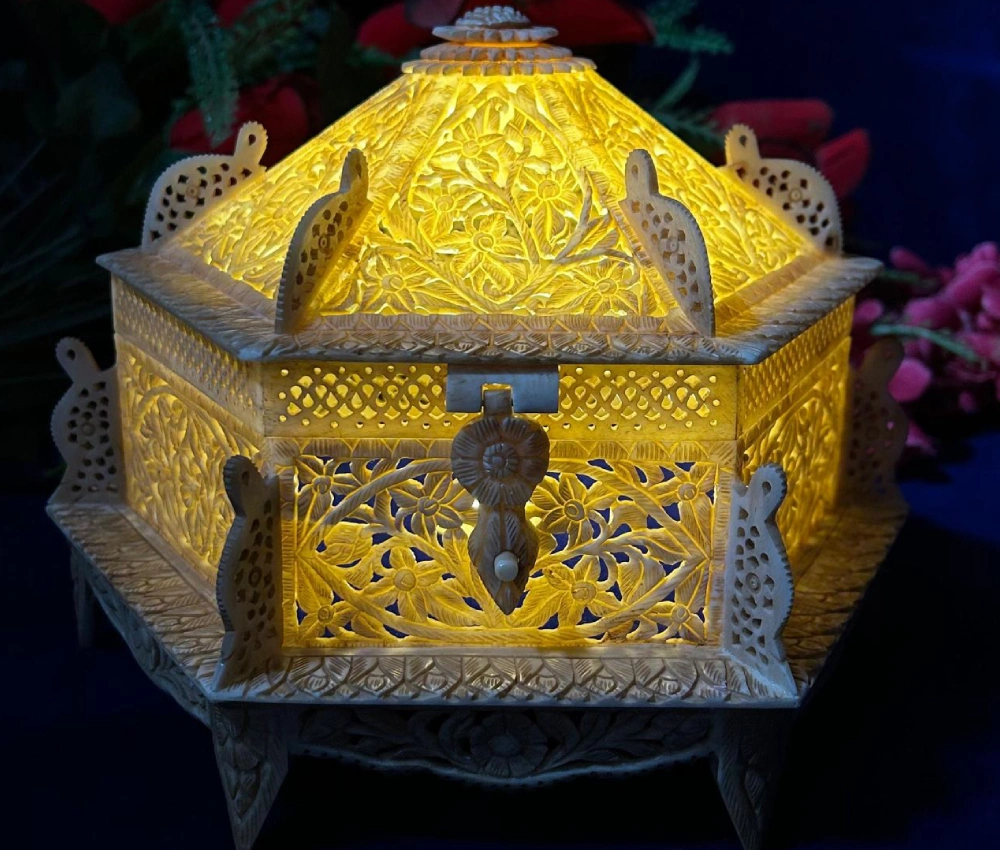
Lucknow Bone Carving is a delicate and centuries-old craft that traces its roots to India’s Mughal era. Developed by skilled artisans in Lucknow, this art form involves transforming animal bone—traditionally camel or buffalo—into exquisite decorative pieces and jewellery. Known for its refined craftsmanship, the designs draw strong inspiration from Persian and Islamic art, featuring intricate floral motifs, geometric patterns, and elegant paisley forms.
Origin
The craft flourished during the Mughal period under royal patronage, where it was admired for its sophistication and fine detailing. Over time, Lucknow emerged as the cultural hub of bone carving, gaining recognition for its precision, artistry, and distinctive aesthetic that set it apart from similar crafts across India.
Process of Making
Each piece of Lucknow Bone Carving is created through a meticulous, multi-step process. Artisans carefully select and treat the bones, bleaching them to enhance durability and achieve a natural ivory-like brightness. Using specialized hand tools such as chisels and fine files, craftsmen patiently carve intricate patterns with exceptional precision. The finished pieces are then polished and may be dyed or paired with metal accents to enhance their visual appeal and elegance.
Decline and Risk of Extinction
Today, Lucknow Bone Carving faces the threat of extinction due to several challenges:
- Ethical and Environmental Concerns – Increased awareness of animal welfare and stricter regulations have limited access to traditional raw materials.
- Declining Patronage – The absence of royal support and changing consumer preferences have significantly reduced demand.
- Loss of Skilled Artisans – Younger generations show limited interest in learning this labor-intensive craft, leading to a decline in skilled practitioners.
- Economic Pressures – Rising material costs and competition from mass-produced alternatives have affected the sustainability of handmade bone carving.
Although revival efforts are underway, sustained support, awareness, and appreciation are essential to preserve this rare and culturally significant art form for future generations.


Reviews
There are no reviews yet.